The Trouble with Sleep

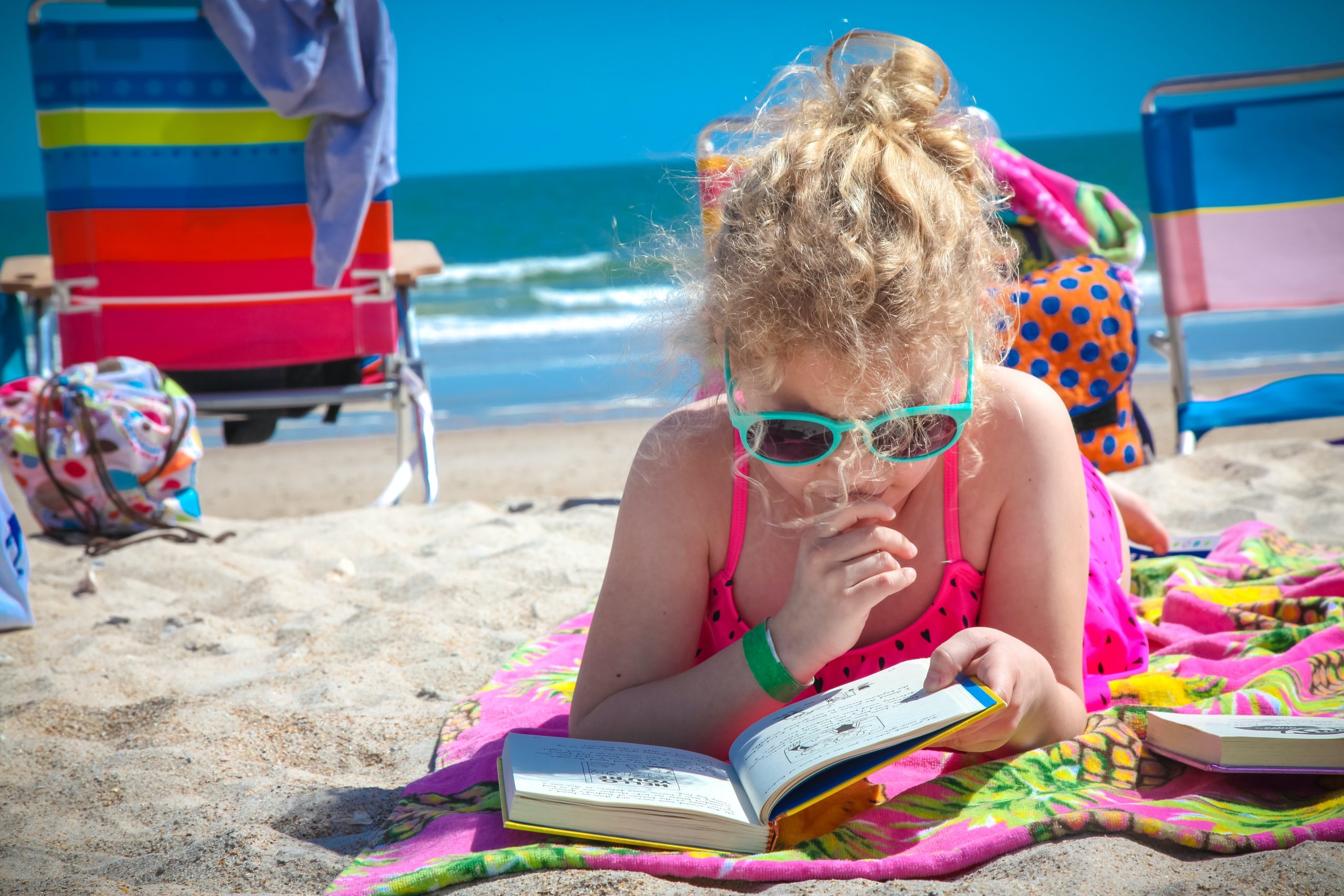
As someone who works almost exclusively with young people between the ages of 14 and 16, I am well-versed in the problem of teenagers and sleep. Any teacher who has been scheduled a challenging class on a Monday morning will understand the issue, but since working online I regularly have the pleasure of being presented with a youngster who has quite obviously been peeled unceremoniously from their bedsheets less than a minute prior our session. I have often advised parents to book a later session, on the grounds that their child is simply not in a fit state to absorb anything prior to mid-morning. There are some that can cope, but for others it becomes apparent that their parents will be wasting the money that they pay me, so groggy and unengaged is their child when the session begins. But just why do teenagers find mornings so palpably difficult?

At the centre of everything is our circadian rhythm, the internal clock which governs when we feel sleepy and when we feel alert. In younger children, as every parent knows, the clock tends to run on the early shift; but somewhere around puberty, the clock shifts — enough to have a pretty big impact. In adolescents, the hormone melatonin, which is central to what drives our urge to sleep, is released later in the evening compared to both children and older adults. This shift in their natural sleep phase means that teenagers genuinely feel more alert late into the evening and do not feel ready to sleep until much later than they used to. I remember this with visceral clarity. Staying up to watch Moonlighting, followed by Indelible Evidence, felt effortless, while waking the next morning felt simply agonising. Teenaged bodies, still growing and developing rapidly, require a substantial amount of rest — typically around eight to ten hours. But if a teenager is wired to fall asleep at midnight, yet still needs to wake up at 7.00 a.m. for school, then we’re faced with a problem.

I always like to ponder why these evidential facts about our biological nature and development might have evolved. It is undeniable that most teeangers experience a change in their body clock as they develop, and it is also undeniable that adults vary in terms of their own body clock: some are natural night owls, some are larks. (You probably have a good idea which one you are, but it’s quite fun to do the test: some people are very strongly one or the other, some people are flexible. I am as much of a lark as it is possible to be). So, why might it be that we vary in this way? As humans evolved, it would have been useful for a tribe to have a variety of members within it, to ensure that there is always someone that is capable of being hyper-vigilant at any time. When life was lived on a knife-edge, an endless battle for survival, it was crucial for the safety of everyone that at least some members of the tribe were capable of functioning at any one time. Thus, these subtle differences in how alert we feel at different times of the day may have been an essential advantage and thus these differences were perpetuated through natural selection.

Of course, biology is only part of the story. If teenagers were tucked away in candlelit rooms with nothing but a paperback novel and their thoughts, they might still stay up slightly later than the adults in the household, but probably not quite as late as they do now. Modern life has introduced a dazzling array of sleep-delaying tactics, most notably in the glowing rectangle of the smartphone. Social media, messaging apps, streaming platforms — all of these operate on the principle that there is always one more thing to see, one more conversation to have, one more video that might be even funnier than the last. If you can establish one rule in the home, it should be that these devices do not take the journey to bed with you. Teenagers are particularly sensitive to reward and novelty, meaning that the little bursts of satisfaction provided by notifications, likes and new content are especially compelling. The result can be a perfect storm: a brain wired to seek stimulation, a body that doesn’t feel sleepy yet, plus a device that delivers endless entertainment on demand. Bedtime, under these conditions, becomes achingly oppressive.

Waking up early for school is difficult not because teenagers are being dramatic (although, to be fair, some drama may be involved in some cases), but because the teenaged internal clock is still firmly set to “night mode.” When an alarm goes off at 6.30 a.m., it is essentially interrupting the biological equivalent of midnight. Imagine being forced to wake up at 2.00 a.m. and then expected to perform algebra, write essays and engage in meaningful discussion. That is not far off what most teenagers are experiencing every day.

The misalignment between biological rhythms and social expectations is sometimes referred to as “social jet lag”. It’s the same groggy, disoriented feeling one might have after flying across time zones, except instead of being a temporary inconvenience, it is a daily occurrence. The result is chronic sleep deprivation, which has a range of effects that extend far beyond simply feeling tired. In the classroom, this can manifest as difficulty concentrating, slower cognitive processing, and a general sense of mental fog. Teachers may notice students staring into space, struggling to retain information, or reacting with the enthusiasm of someone who has been asked to solve a puzzle while underwater. It’s not (always) that teenagers don’t care about their education; it’s that their brains are not operating at full capacity during the hours when learning is expected to happen.

Sleep deprivation is also closely linked to irritability, emotional volatility and increased stress. Sound familiar? Parents, who may already be operating under the assumption that their teenager simply needs to go to bed earlier, are so often met with morning grumpiness that can escalate into full-blown conflict. The state that a young person is in can reinforce the adults’ belief that the child should retire to bed earlier. The teenager, meanwhile, feels misunderstood and unfairly judged, leading to a cycle of frustration on all sides. What makes this situation especially tricky is that both perspectives contain elements of truth. Teenagers do, in many cases, make choices that exacerbate the problem — staying up later than necessary, using devices late into the night and underestimating the importance of sleep. I did this myself on an infinite loop and looking back it seems ridiculous. Yet at the same time, I remember vividly how alert I felt in the late evening and how utterly unattractive it seemed to take myself off to bed. The fact remains that the underlying biology of teenagers genuinely does make early sleep and early waking more difficult for them. It is not a simple matter of willpower, nor is it entirely in their control.

Some schools have tried to take the peculiar biology of teeangers into account by experimenting with later start times. Research suggests that even a modest delay in the beginning of the school day can lead to improvements in attendance, academic performance and overall well-being. Teenagers who are allowed to wake up in closer alignment with their natural rhythms tend to be more alert and more engaged. I have always wondered, however, what these schools are like for the adults. Speaking as someone whose energy is now heavily weighted towards the morning (I spring awake, starving hungry, at around 5.30am most days), I would hate to work in a place where the day was shifted later. This is the problem: the teenagers are not the only ones with skin in the education game.

Given that all schools still start significantly earlier than most teenagers would like, there are nevertheless small changes that can help. Exposure to natural light in the morning can nudge the circadian rhythm slightly earlier, making it easier to wake up over time. Limiting screen use in the hour before bed can reduce the stimulating effects of both blue light and stimulating content, giving melatonin a better chance to do its job. Consistent sleep schedules, even on weekends, can also make a difference, although this is perhaps the most challenging suggestion of all, given the powerful allure of a Saturday lie-in. It all seems rather easier said than done, and my parents certainly gave up even trying. Ultimately, understanding is key. If families can recognise that their teenager’s sleep patterns are not entirely a matter of choice, and if teenagers can be persuaded to acknowledge that their habits can influence their well-being, the conversation can at least be had.

It is, in the end, a delicate dance between what our bodies want and what our schedules demand. Teenagers, caught in the middle of this dance, are not failing at mornings so much as they are beginning to negotiate with them. If they’re lucky, they will become a lark like I did, and the world will become an infinitely easier place to negotiate (unless they want to work in the nightclub industry, I suppose). So, if your teen occasionally hits the snooze button one too many times, it might be worth remembering that they are not resisting the day — they are just trying to catch up with a night that ended a little too soon for them.

Photo by Greg Pappas on Unsplash

Flawed heroes

It is a truth universally acknowledged that the one thing we love more than a hero is to see a hero fall. I’m not sure whether this is an entirely modern phenomenon, but it is perhaps a tendency that has burgeoned in recent decades. More than this, something which I do think is peculiar to our age, is the expectation that historic figures should be judged according to 21st century western values. This, especially when it is pitched against some of the figures who had a significant hand in the process of carving those same values, leaves me distinctly uneasy.

Last week, the BBC reported that Hinchingbrooke School in Huntingdon was swapping the name of one of their pastoral houses from Pepys to Lady Olivia. The process was enacted via a democratic ballot, which turned out to be a classic example of western democracy in action, given that the much-celebrated result was voted for by less than 50% of the electorate. Nevertheless, Lady Olivia, wealthy landowner, school sponsor and evangelical Christian, now finds herself named as the chosen figurehead for modern students in the school that Pepys attended, along with Oliver Cromwell. One can only hope for her that there are no skeletons in her cupboard, to be discovered down the line. There’s always a tweet.

Samuel Pepys seems to have gotten away with being a prolific sex offender without much modern public disapproval until 2025, when historian and translator De la Bédoyère went back to Pepys’s original manuscripts and translated all of his coded entries, which he wrote in a kind of Franglish, Pidgin Latin and a smattering of Spanglish. De la Bédoyère re-published Pepys’s diaries in all their glory, and the result is the extraordinarily detailed snapshot of 17th century life that one might expect; unfortunately, that life is one of a man for whom praying upon vulnerable women was a something of a daily occurrence. It was certainly an education for me, reading what this serial predator got up to on an average day, and it very much does not chime with 21st century western values. Historians are keen to point out that Pepys’s behaviour didn’t even chime particularly well with 17th century western values, as he seems to have had something of a reputation in his day. I only wish I could believe the world has changed, but let’s not pretend that it has. Men with such reputations are still running several countries.

I have been pondering the school’s decision to demote Pepys from his position as a House name and I have no wish to criticise it. The school has already made it clear that there are parts of the school named after Samuel Pepys and that those tributes to him will not change. I have no doubt whatsoever that the school was placed under enormous pressure by a vociferous minority and I don’t even have a particular issue with that in some ways: perhaps those individuals are right. If I had a daughter in the school, perhaps I might have agreed with them that there are better figureheads for her to look up to. Whatever my individual thoughts on the matter, it is inescapable that these days it only takes one parent with a bee in their bonnet and an active WhatsApp group to dictate school policy and this — for better or for worse — is the reality of where schools find themselves today. Headteachers have to pick their battles, and going out to bat for Samuel Pepys was perhaps not something the Headteacher felt was a hill worth dying on.

What I think is more interesting is to ponder whether we have lost something when society cannot tolerate undeniably serious flaws in their heroes. Is this a quirk of the kind of modern puritanism that we find ourselves facing today? If we turn to the ancient texts for our model, the authors of those understood only too well the value of a rounded hero, indeed the very definition of hero required the inclusion of multiple flaws. The notion of a “fatal flaw”, popularised by Rennaissance readings of Aristotle’s Poetics, influenced Shakespeare and other writers. There is unanimous agreement from ancient times to modern that the most interesting heroes are the ones with inherent weaknesses: a perfect hero would be a thoroughly tedious creation.

When Virgil introduces Aeneas as the hero at the beginning of his epic work, he does something quite remarkable. When we first meet Aeneas, he is at his lowest ebb. Battle-fatigued and a travel-worn refugee, Aeneas is at breaking point. He screams and cries and implores the gods to take him: why did I not die in Troy? he asks. What was the point of it all? The visceral shock of introducing us to a hero who appears to have abandoned all hope and is wishing he was dead is one of the most exciting decisions that the author could have made, and it thrills me every time I revisit the text (which has been hundreds of times over the last two years, for that section of the text is on the specification for OCR GCSE). The point, I think, is for us to reflect upon how much more impressive it is when Virgil later describes Aeneas suppressing his emotions, resuming command and leadership over his men: someone we have witnessed at cracking point does the right thing for the good of the majority and for the men in his care. Now, that’s a hero.

Not only does Virgil start his epic work with a radical take on heroism, he ends it controversially, by demonstrating that Aeneas is very much less than perfect. At the end of the epic battle that ensures the supremacy of the Trojans in their new homeland, thus securing the future of what will become the Roman empire, Aeneas is faced with his arch enemy, who begs for mercy. The tradition in ancient texts was that good heroes are extraordinary warriors but they do not give in to blood-lust; whenever a warrior is taken over by this kind of crazed, emotionally-charged violence, disaster tends to ensue and the warrior is punished for his misdemeanours. Good warriors show mercy when the time is right. Yet Virgil does not finish his work in this way. As Aeneas looks down upon his enemy, he is overwhelmed by rage, bitterness and grief: he slays him, quickly and ingloriously, and the epic finishes with our hero’s enemy groaning his last, his tortured soul shrinking away to the underworld. It is a radically depressing way to close an epic work of propaganda and reflects a true genius at his peak. The reader (or more likely the listener) is left with an uneasy sense of disappointment in our hero, left to carry the burdensome knowledge that founding an empire is not without its price and that war makes even good men do terrible things.

Perhaps indeed we have lost something along with the present-day puritanism that judges historic figures according to our modern western values and — inevitably — finds them wanting. Personally, I don’t have a problem with recognising the contribution that Pepys made through his unflinching account of 17th century life alongside the fact that the life he describes is one to which I would viscerally object. It’s what history is all about. What I hope for the future is that we can have these discussions in a more mature and nuanced way. There is nothing more irksome that the modern tendency towards cancellation and extremism, the “no debate” lobby, who consistently fail to understand that the very pluralistic society that they believe in so fervently and lobby so hard for requires endless compromise and true tolerance, the kind of forbearance that makes you feel uncomfortable and sometimes forces you to question your own values. I occasionally wonder whether the louder the cancellation crew shout, the more they’re trying to drown out the voices of doubt in their own head.

Photo by Esteban López on Unsplash

Adolescent ramblings

“As a father, watching Adolescence with my teenage son and daughter hit home hard. We all need to be having these conversations more. I’ve backed Netflix’s plan to show the series for free in schools across the country, so as many young people as possible can see it.”

Keir Starmer, on X, March 31st

There is so much that infuriates me about this tweet that I struggle to know where to start. But before I launch into my take from the standpoint of an ex-schoolteacher, let me speak simply as a voter. Where have all the statesmen gone? How do we find our country led by someone so easily swayed by the public response to a work of fiction, aired on a popular streaming channel? I suppose in the same way as we ended up with a leader who is currently overseeing the most significant change in UK human rights law for decades, simply because – and I quote – he “made a promise to Esther Rantzen.” The Prime Minister of the United Kingdom is governing according to what celebrities want him to do and according to the public hand-wringing about a Netflix drama. We truly are through the looking glass.

I have always had my frustrations with our robotic PM, merely the latest in a long line of identikit ministers, who appear to have no idea what they believe in or what they stand for, but my frustration with Starmer’s comments this week stem from the consistent way in which schools are now held accountable for every ill in society. Rising knife crime? Get schools to deal with it. Burgeoning antisemitism? Get schools to address it. Just this morning, Education Secretary Bridget Phillipson called for “more male teachers, so British boys have role models.” This call comes, despite the fact that we have zero evidence that increasing the number of men working in a school has any net positive effect on the boys in their care. Anecdotally, I am happy to report the blindingly obvious observation that for every boy inspired and managed by the 6ft 7 PE teacher with the booming voice (and believe me, I have gone to such men for help when managing a certain kind of boy), there are likewise just as many boys who will relate to and be inspired by me, by their flamboyant male drama teacher, or their zany female art teacher. I wouldn’t have thought, in 2025, that one needs to point out that there is more than one type of boy.

“Schools can’t solve these problems alone, and responsibility starts at home with parents. But only one in four of the teachers in our schools are men. Just one in seven in nursery and primary. One in 33 in early years,” says our illustrious Ed Sec. See just how much heavy lifting the “but” is doing in that quote? Schools can’t do everything, BUT … let’s focus on them anyway. This is how education gets treated by the government – we are the punching bag for society’s frustrations and we must solve all its ills. The drama Adolescence raised questions about parenting, as well as the potential role played by the influences of social media in young people’s lives, but governments don’t want to talk about these things. It is an obvious fact that more of their voters are parents than teachers, so it’s much easier to blame the latter than the former for society’s problems. As for social media and the internet in general, the government has absolutely no idea what to do and they certainly don’t want to do the most obvious thing, which is to challenge individuals to take more responsibility for what their own children find themselves exposed to. What they may do, which is take the opportunity to bring in more laws to curb free speech online, I can’t even bear to think about.

No, let’s say the schools have to tackle it all. Let’s argue about whether or not phones should be banned in schools, rather than discuss the fact that it is the children’s parents who fund the very existence of these devices in the first place. Schools are not responsible for the fact that many – perhaps even most – children have unfettered access to the internet. That responsibility lies with the adults that purchase the device, hand it to their kids and pay the bill for its extensive usage. Schools have had this problem dumped upon them and trust me, they feel the fall-out. You wouldn’t believe how much time is wasted in schools while pastoral leaders investigate cases of bullying, harassment, sexting, indecent images and incitement to violence that take place through these children’s mobile devices on a daily basis. One of my earliest shows for Teachers’ Talk Radio explored the relationship that teenagers have with their smart phones: I interviewed Matt Crowley, lead DSL (Designated Safeguarding Lead) in the school in which I was working at the time. He talked about the serious safeguarding risks and the systemic damage to a child’s mental health, self-esteem and personal safety which can arise from the use of these devices – in school and beyond. None of this is news to teachers; we’ve been saying it for years.

To return to Starmer’s tweet, let’s focus on the absolutely ridiculous proposal that Adolescence, a Netflix drama, should be “shown in schools”. Unsurprisingly, the writers and producers of the show are delighted by all the fuss. I bet they can’t believe their luck. There are influential talk-show hosts out there, not only recommending the show, but berating politicians who have not watched it as “ignorant”, “uncaring” and “out of touch”. Apparently, it’s compulsory viewing and if you haven’t viewed it, you’re an officially Bad Person. But let’s actually think about the idea that this drama should be “shown in schools”, shall we? Firstly, shown to whom? The drama is rated 15, so schools would not be able to show it to any year group below Year 11, since some students in Year 10 will not turn 15 until after the end of the academic year. If Starmer thinks the drama is so significant and truly reflective of reality (he has twice accidentally referred to it as “a documentary”, which is actually terrifying), I would point out that the perpetrator of the crime in the drama is thirteen years old. Showing the drama to 16–18-year-olds would thus seem to be missing the point.

Furthermore, and this applies to the equally insane directive that schools are now somehow responsible for teaching children how to brush their teeth, what would Starmer like schools to remove from the curriculum in order to make time for this four-hour TV marathon? One assumes that he doesn’t want them taken out of maths, English and science, so perhaps he sees it as fitting within the PSHE programme. Does he know that most schools barely manage the advised one hour per week? That they seriously struggle to fit this in? What would he like us to remove from the curriculum in order to make way for a drama that at least half of the kids will already have seen at home? Sex education and consent? I would have thought that was pretty important to cover, given the content of the drama. Alcohol, smoking and illegal drugs? How about college applications and how to present yourself at interview? Financial literacy? Martin Lewis won’t be happy, and given Starmer’s terror of celebrities that will mean some more sleepless nights for him. What a dilemma, Keir! Isn’t leadership difficult?!

I struggle to respect a leader who is so beleaguered by the ebb and sway of public opinion and general feelz. This is a Prime Minister who has somehow found time in what one would have assumed is a busy week to meet with the writer and the producer of the Netflix drama to discuss it. I mean … what?! I would rather he got on with the business of government. If the man stands for anything then he needs to convince me that he cannot be pushed around by celebrities and current talking points. But it seems we have somehow grown so used to weak leadership that now we take it for granted.

Let me count the ways

How do we let young people down in 2025? Let me count the ways. Beyond our inexplicable willingness to allow them unfettered 24-hour access to the dark world of the internet, beyond our discomfort with and unwillingness to take the responsibility that lies with adults, to be in charge and to be the grown-ups in the room, beyond this lurks yet another way in which we can let them down. We can teach them an inflated sense of their own importance; we can let them believe that the world revolves around them and let them imagine that, when they reach adulthood, their employer will bend to their every whim. How do we do that? Let me give you an example.

It is not often that I read a post on LinkedIn, as it’s never an enriching experience. But imagine my horror when I happen upon someone who claims to be a fellow educationalist openly celebrating the news that a child is missing their lessons for no good reason other than the fact that it is their birthday. “Let’s normalise taking your birthday off without any further  explanation or drama required,” she exclaimed. “Life’s too short not to!” She also celebrated “the beauty of flexi/online schooling,” showing at least some awareness of the fact that the average UK school would take a pretty dim view of any student – or their parents – citing a birthday as a reason to take a day off.

To be clear, it was apparent from her post that this person was talking about the kind of tutoring that is there to replace traditional schooling, not supplement it. As someone who works with students who attend mainstream school, I have had several occasions on which parents have cancelled their evening appointment with me due to birthday celebrations, and that is just as it should be: the child has already done a day’s schooling and it seems more than reasonable to reserve their evening time for birthday celebrations with family and/or friends. But this tutor was celebrating the fact that their student was missing an entire day’s worth of schooling, and even seemed to be implying that – in an ideal world – schools would be willing to accommodate such a decision. The responses were mainly positive, with several people – all of them no doubt making money out of the increasing trend of parents taking their children out of the traditional education system – applauding the sentiment. “Brilliant! Joy, wellbeing and belonging first, then education will flow and be valued” asserted one, a remarkable claim which I would love to see the data on. “All my students take their birthdays off, and I encourage it,” said another. “Absolutely brilliant,” said a third: “I too encourage my students to take their birthdays off!”

There were one or two of us speaking up for sanity, so all is not lost. One or two people commented that allowing students to take random days off is disruptive to both the teacher and the learner. I commented that allowing students to take time off in this way is surely setting them up for future disappointment in life. There are not many people in this world who are so blessed that they can pick and choose whether or not they go into work on a particular day. If at least part of education’s purpose is to prepare students for working life, then what kind of precedent are we setting by normalising the expectation of a day off on their birthday, rather than explaining to them that school is still there – birthday or not – and reassuring them that celebrations will be had when it is finished for the day?

There are innumerable jobs which do not allow for days off at your preferred time, including some quite noble careers. Teaching, for example, is well known as a profession in which you do get lots of time away from the chalkface, but the price you pay for the significant chunks of flexible free time undeniably allowed to you is that the times when you are tied to the chalkface are 100% dictated by your employer. It is quite remarkably difficult for classroom teachers to negotiate any time away from their classroom, for blindingly obvious reasons. I remember a wealthy friend once invited myself and my husband to Glyndebourne, in an ill-fated attempt to convert me to opera. “You’d have to take the afternoon off,” he said, airily. I snorted with mirth, for this was just one example of how someone in his wealth-bracket tends to presume that the world works for everybody else. It was almost worth me booking an appointment with the Headteacher, just to see the look on her face when I requested the afternoon off “to attend the opera.” Many of our young people will end up in jobs like mine, when time off at one’s own behest is simply not on the cards. Granted, many of them won’t. The point is: all jobs include “have-tos” (true even for my wealthy barrister friend), and young people need to learn this simple fact. Otherwise, we are letting them down.

Beyond the fact that school attendance teaches children about the “have-tos” in life, allowing time off at a child’s behest devalues education itself. Taking students out of school for random events should not be done lightly, for in doing so we are inevitably sending a message to a child that their schooling is not important to us. This then echoes down the line when it comes to their day-to-day studies, their preparation for examinations, their overall efforts to achieve academically. Why should it matter to them, if we are constantly undermining the message that it matters to us by taking them out of school?

My third and final objection to the idea of allowing and encouraging students to take time out of school for their birthday is perhaps a little controversial, so brace yourselves. Here goes. Quite simply, I think it is too self-indulgent. I am so depressed at how society seems to be shifting more and more towards an entirely individualistic mindset, one which prioritises the wants and needs of the individual over and above the needs of the community as a whole. While I would never object to the idea that one should be mindful of one’s own health and wellbeing, indeed I write often about my efforts to centre my own, the expectation of one’s right to do so has become so unquestionable that we are beginning to forget what binds us together as a community. In our relentless pursuit of independence and self-efficacy, I fear we may end up with a world full of egocentrics.

In the grand scheme of humanity, nobody’s birthday is actually that important, because nobody is the centre of the universe. We need to keep our special dates in perspective. They matter to us and – if we are lucky enough – to those who care about us. They do not – nor should they – impact upon the rest of the world. If that seems a little too nihilistic for your liking, then here’s another way of looking at it: if it’s their birthday, wouldn’t it be better for a child to go into school and celebrate by sharing the love with their classmates? Over the years, I have had several colleagues who liked to make a fuss on their birthday, so they brought in cakes and shared them with all of us. It was an absolutely lovely thing to do and everybody enjoyed it. And everyone wished them a happy birthday! So, if we believe that birthdays are so special and important, then why don’t we teach our children that their birthday is a chance to bring some joy to their usual routines and responsibilities, not an opportunity to evade them?

Photo by Adi Goldstein on Unsplash

Riots and hanging baskets

The recent civil unrest on our streets is the most serious we have seen since August 2011, when a similar spate of violence and looting occurred following the shooting of Mark Duggan by police in Tottenham. I remember the 2011 riots well, because I had not long moved out of that area of London and the shooting itself plus the events that spiralled out of control following it were a stark reminder that I felt lucky to be out of an area that had seen four murders within one mile of my house during one single year.

Shortly after those riots in 2011, my husband and I found ourselves driving through the tranquil streets of Henley-on-Thames, on our way to visit family. My husband remarked upon the glorious hanging baskets and pointed out that one did not tend to hear of riots reported in the heart of towns which were festooned with floral displays. “That’s clearly the solution!” he cried, banging the steering wheel. “Deploy baskets of petunias immediately to all towns across the UK! They are the frontline in riot-prevention!”

He was joking, of course, and the joke relies on an understanding of the fact that correlation is not causation. I’d be willing to place a bet that the presence of hanging baskets would indeed be a pretty reliable indicator that riots have never taken place in a particular town. Yet it is not – as any sane individual would acknowledge – the presence of the hanging baskets which actually prevents the riots. So why might they be a reliable indicator? Why might the presence of hanging baskets correlate with a lack of riots? Well, one can assume, the sorts of towns that are decorated with hanging baskets are also the sorts of towns that tend not to be a hotbed of civil unrest: hanging baskets tend to be visible in wealthy towns, filled with well-to-do people who are quite happy with their lot in life, thank you very much. I may be way out of line here, but I would venture that the people of Henley-on-Thames – generally speaking – have rather less to feel disgruntled about than the people who inhabit the most deprived parts of London, Manchester and Hartlepool. (Apologies if you’re miserable and living in Henley – I’m sure it’s ghastly).

My husband’s wry suggestion that hanging baskets should urgently be deployed in all UK towns for riot-prevention may seem laughable, but unfortunately this kind of ridiculous action is not unheard of in most walks of life. None of us are immune to mistaking correlation for causation, and the issue of separating the two is the main reason why observational studies make for such weak evidence in medicine and in education. Observational studies are considered to be of a lower standard of evidence than experimental studies: not only can they not be used to demonstrate causality (in other words, they identify correlation but not necessarily causation), they are also more prone to bias and confounding as a result. Studies in the area of human health are notoriously difficult when it comes to the confusion between correlation and causation. For example, there is a direct correlation between poverty and the likelihood of an early death. The exact causation behind this is almost insurmountably complex and relates to a myriad of intersectional, underlying causes.

The tendency for those in power to mistake correlation for causation has been something of a bugbear of mine throughout my career and is responsible in part for the slow creep of increasing workload that is driving teachers out of the profession. Another of my husband’s witticisms, which I suspect can be applied to most professions, is a false syllogism that run as follows: “something must be done, this is something, so let’s do this.” I have lost count of the number of times that this syllogism ran through my head as I listened to management announcing their latest wheeze while the minutes of my available professional time ebbed away. Pretty much every single intervention proposed for Pupil Premium students can be placed in this category. And as for the money … since April 2011, when the Pupil Premium system was introduced, the government has ploughed between £1 and £2 billion per academic year into ring-fenced funding for Pupil Premium students. Despite this, the outcome gap between advantaged and disadvantaged students in our schools has remained roughly the same and indeed has widened since the pandemic. The Pupil Premium system is a total failure.

When it comes to the likelihood of schools being in a position to turn this situation around, I must confess to feeling a little dismal. Schools who do manage to buck the trend are largely ignored, especially if their methods do not suit the political bent and social sensibilities of their critics. This year, the Michaela School achieved over 50% Grade 9s in their GCSEs, despite working with an intake of students in a very deprived area. Michaela’s last Progress 8 score (which measures the input that teaching has had on pupil outcomes) placed the school as the best in the country. More than 90% of their children receive passes in English and Maths GCSEs and more than half of them gain a Grade 7 or above in 5 subjects. Yet still their detractors have nothing positive to say about this, nor any suggestion as to how such outcomes could be matched.

It seems to me that a much more scientific and dispassionate approach is required to prove and replicate outcomes in education. We need to ditch all political bias and look at the evidence with fresh eyes. For until we can make this shift, it seems to me, we will be doing nothing more than adorning the most impoverished streets of our most deprived towns with some hanging baskets and expecting that to solve all of their problems.

Terms of Endearment

There was an interesting discussion on Threads last week, which is not something I thought I’d write in a hurry. While the platform formerly known as Twitter is always a raging hotbed of edu-controversies, Threads has remained to date extremely civilised, largely because nobody is saying anything on there most of the time. Last week, however, an Assistant Principal whom I follow on both platforms made the following remark: “Talking to a friend about this the other day and didn’t realise there were such polarised views about this. Are pet names ok in school? As in, is it ok to saying ‘what’s happened, my lovely/darlin/poppet?’ to a pupil?”

The responses were diverse and sometimes extreme, with one teacher even suggesting that pet names “made their skin crawl” and claiming “it’s inappropriate and creepy. I’d be horrified if someone in a position of power used such a term to me so kids deserve the same respect.” Hmmmm, I thought. Are pet names really such a problem?

A more nuanced view followed: “I find it grates a bit for me when I hear it so I’m not keen but that doesn’t mean I think it’s a major issue. I do think it’s one of those things where the appropriateness probably depends on the member of staff/the pupil/ the context and those things aren’t always easy to judge.”

Always up for a debate, I waded in and pointed out (alongside others) that regional variations are without a doubt something to be considered before we form the view of “definitely unacceptable”. Pet names – and indeed, particular examples of pet names – are used far more in certain regions of the UK than in others. Personally, I cling to the idea that teachers, while they should always be professional, should also be themselves. If terms of endearment are part of a teacher’s vernacular then I would think it only natural for them to use them in certain contexts, wherever they live now. Students need to learn about such things after all; regional variations in vocabulary, accent and phraseology are a part of our diversity.

One of the many elephants in the room best to address head-on is what I say to a child in my position as a middle-aged woman is perhaps not what I would choose to say were I a man or perhaps even a younger woman. Once you’re in the same bracket as “mum” or (hideous to admit but increasingly undeniable) “nan” for the majority of students, most of your words are automatically assigned a kind of maternal, non-threatening tone. Something I have thought about considerably in recent years is that if I am going to use endearments then these should be shared out equally to the boys as well as the girls. It was pointed out to me a few years ago, to my considerable shock, how differently adults tend to speak to boys compared to girls and it is something I have worked on ever since. Both boys and girls seem to me to actually rather like terms of endearment, when used in the right context and in the right way.

Context is everything. Terms of endearment can of course be used to patronise and silence individuals, particularly women, and I am certainly not going to make a case for them being appropriate in all fields. It would not, for example, be appropriate for a male Member of Parliament to tell a female member to “call down, love”, although the tone of certain cabinet ministers has indeed got dangerously close to this threshold a number of times. In teaching, however, I do not believe that assuming a parental tone with children is inappropriate. In addition, my desire to remain sensitive to regional variations is more important to me than preaching any kind of universal language. Despite being a passionate feminist, I have never thought it appropriate or indeed desirable to kick off at every London cabbie that calls me “love” or every Geordie that calls me “pet” as – to be frank – I would argue that doing so would demonstrate more ignorance on my part than the use of such terms is claimed to indicate on theirs. We live in a rich and diverse society, where language means different things to different people, and we should all be thoughtful and grown up enough to deal with this without getting an attack of the vapours every time we venture outside our own close-knit social milieu.

As many people pointed out in the discussion, tone is crucially important. A term of endearment is, in my opinion, a nice thing. If endearments are a part of one particular teacher’s vernacular then I think that’s fine, so long as those endearments are used consistently with lots of different students and are not used to patronise, denigrate or control others. In my 21 years of teaching, I have never heard this to be the case. Teenagers, it seems to me, often stop being spoken to in such a way as they age, and it is actually something of a shame; adults tend to assume they don’t like affectionate terms (probably because so many teenagers do spend a lot of their time bristling and shrugging them off) but actually they crave our attention and our affection more than we know.

My view would be that if endearments come naturally to someone, I would not discourage them actively from using them in schools, so long as they are used fairly and genuinely. While professionalism and boundaries are crucially important, we should not be losing our individuality or indeed our humanity in the name of this.

Image generated by AI

Invested in Education?

“It is difficult to get a man to understand something when his salary depends on his not understanding it.”

Upton Sinclair

Full disclosure: I’d never heard of Upton Sinclair until I read this quotation. I first came across the remark when reading about the literacy crisis in America. I had already listened to the eye-opening podcast Sold a Story and was appalled at what I had heard. I then started looking at some of the debates happening online around how reading is taught in the US and how this has been dominated for so long by methods that don’t work effectively, but which make certain authors and publishers a great deal of money. The notion that anyone could push an idea in education purely for monetary gain seemed so appalling that I found myself wondering whether it could possibly be true.

Spolier alert: it is entirely possible. However, like most things in life, I think it’s a little more complicated than pure greed. Sinclair is absolutely right that people will continue to advocate for a bad idea to sustain their income, but I do cling to the notion that they probably have a personal investment in the idea that goes beyond the financial. Their self-worth, their self-belief and sometimes their very identity can be at stake. It’s jolly difficult to admit that you might have been mistaken about something that you’ve made your life’s work. Add to this the fact that – as Sinclair puts it – your “salary depends” on not being mistaken, then the process of enlightenment becomes close to impossible.

I have changed my mind about a range of things during my 21 years as a classroom teacher. What I believed to be the case when I started turned out to be wrong, and this is not because I became a cynic or “gave up on my principles” – quite the opposite. Changing your mind is challenging. The principles I have stuck to have been to follow the evidence of what is best for the majority of children. When I have been presented with overwhelming evidence that my approach towards doing something is less effective than someone else’s, then I have been willing to change my approach. I let go of my beliefs in the face of the evidence and I am a better teacher for it. Sadly, this seems to be an unusual attitude and I am constantly disappointed by how determindly people hold onto their beliefs against all the evidence. It seems to me that a lot of people care more about following their ideology than they do about genuinely doing what’s right; anything that seems to jar with their worldview frightens them so much that they’d genuinely rather avoid it, even when the evidence suggests that it helps learners more, or lifts a greater number of people out of poverty.

Even Andrew Wakefield, the disgraced and now struck-off consultant paediatrician, who first penned the now-discredited studies claiming a potential link between autism and the MMR vaccine, believed in what he was doing at the outset. Since then, having moved to America and been welcomed with open arms by the “anti-vax” lobbyists across the pond, doubling down on his beliefs rather than accepting the overwhelming scientific evidence that they were incorrect is by far the more attractive path for him to take. Why roll back on a position that’s making you a fortune? He will never change his mind – why would he?

It would probably shock most people to know just how much the education system has been at the mercy of snake-oil sellers and woo-merchants over the last 30 years. Some of it is still ongoing. In my time in schools I have sat through talks on such unscientific nonsense as Brain Gym, learning styles and the left-brain-right-brain “theory”. All of these sessions were run by “educational advisors” that the school had paid to train us. The waste of tax-payers’ money paying these people – whether they were well-meaning and deluded or outright fraudsters – makes me want to weep. Worse than this, however, is the thought that this money has not just been wasted, it has actively harmed the education of hundreds of thousands of children; teachers have been directly taught misinformation about how the brain works and about how children learn, at the expense of the wealth of genuine information that there is out there through cognitive science. If I think about it too much, it’s not good for my blood pressure.

I would love to think, with the advent of grassroots movements such as ResearchED giving ordinary teachers the confidence to push back against the tide of quackery, that the days of such cynical peddling are over. Sadly, we are not quite there yet. Just this week, with examination boards purportedly considering a shift to examinations being done on computers instead of by hand, there are the usual string of ed-tech salesmen rubbing their hands with glee. The amount of money that schools have wasted on tech over the years makes me feel quite ill. In the 21 years I spent in the classroom, I saw the arrival of the first interactive SmartBoard in one, lived through their proliferation in every classroom in every school, and lasted long enough to see the majority of them ripped out again, replaced by ordinary whiteboards. Each one of those SmartBoards originally cost a couple of thousand pounds and they all ended up in a skip – not because they were replaced by superior technology, but because most teachers realised that they were unncessary, unwieldy and impractical to use in the classroom.

There isn’t a week that goes by when I don’t think of Sinclair and his insightful observation. In terms of education, all we can do is continue to empower teachers to question everything that they are asked to do. My mantra in my last few years was “show me the evidence”. I know he’s a controversial figure for many, but Richard Dawkins writes so well and has a talent for wordsmithery that far exceeds mine. In his wonderful letter to his 10-year-old daughter, he concludes as follows: “What can we do about all this? It is not easy for you to do anything, because you are only ten. But you could try this. Next time somebody tells you something that sounds important, think to yourself: ‘Is this the kind of thing that people probably know because of evidence? Or is it the kind of thing that people only believe because of tradition, authority or revelation?’ And, next time somebody tells you that something is true, why not say to them: ‘What kind of evidence is there for that?’ And if they can’t give you a good answer, I hope you’ll think very carefully before you believe a word they say.

Photo by Josh Appel on Unsplash

in loco parentis

‘Until someone is held accountable for Jessica’s death we will never be able to process what happened to her. It simply can’t be the case, in those circumstances, that a young girl with her whole life ahead of her died and it’s no one’s fault.’

Hannah Davison, elder sister of Jessica Lawson.

In the Spring of 2015 I returned from my last school trip abroad. Before I even made it home, before the wheels of the aircraft had touched the tarmac, I had already decided: never again. I had run around 10-12 trips to the Bay of Naples in my time and I knew I couldn’t cope with it any more.

With hindsight – and certainly for the students – that final trip was no more eventful than any other. One child projectile-vomited across their hotel bed-blankets. Another sustained sunstroke. Lots of blisters. A few behavioural issues. The usual. But on the penultimate night of the trip, as a direct consequence of a bizarre sequence of events that no Risk Assessment could have predicted, one child slid to the floor and hit their head. On an Italian hotel floor. As anyone who has stayed in one will know, that means the floor is made of marble.

That night was a black vortex of terror. I consulted the laminated card issued to trip leaders with contact details to be used in the event of a life-threatening event or a life lost on a trip. The Senior Leader on call was calm and efficient and informed the parents that their child had been taken to hospital and was having a brain scan. It was the most horrifying few hours of my life.

He was fine. Completely fine. Joined us on the outings for the next day with no ill effects. Situation back to normal, everybody move on. Only I couldn’t. I was left in the grip of a fear I had always carried.

What if?

What if?

What if it happens on my watch?

On my return to the school I informed the Deputy Head – the same man who had taken my strained call on the night of the event in question – that I had decided against running any more school trips. He was kind but dismissive and clearly thought that I would change my mind. When I explained my fear, that if something were to happen to a child on my trip, not only would I struggle to deal with the guilt, I felt sure that I would be held accountable, blamed by everyone and most likely in the dock, he chuckled; he told me that I was being a little paranoid and said that so long as my Risk Assessment was robust I had nothing to worry about. I was convinced he was mistaken. Not only mistaken, but deeply naive. I have a huge amount of respect for most of the Senior Leaders I have worked for, but sometimes they are just plain wrong. He and I argued for a while about the way society had shifted towards a blame-culture, in which accidents could not happen and people always had to be held accountable. He remained convinced that a robust Risk Assessment was the answer. We parted on friendly terms, he in the hope that he had changed my mind, I even more convinced of my decision.

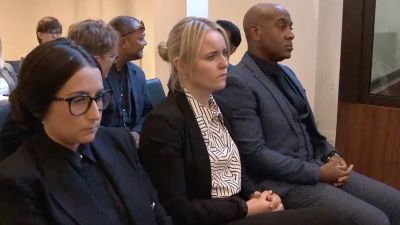
That very summer, July 2015, in the first week of the school holidays, my blood ran cold in my veins as I heard on the news that a little girl had drowned in an accident on a school trip in France. Senior Leaders from the school and other support-workers were flying out to Limoges where the accident had happened. It felt like my nightmares were being played out in front of me on screen and I wept for everyone involved: the child lost to us, her desperate family and every member of staff on that trip who had given up their time and their energy to give some children a memorable experience, only to find themselves trapped in a nightmare they would never wake up from. I knew that they would never forgive themselves. I knew that they would never recover. What I did not know is that they would see my imagined nightmare scenario all the way through to the dock, accused of “manslaughter through gross negligence” a full seven years later.

All three teachers and the lifeguard on duty at the beach faced these charges in a French court this year. Seven years of waiting through what was no doubt an agonising preparation process. Yet Marie-Sophie Waguette, head of jurisdiction at the Palais de Justice in Tulle, said there was “no evidence to show that they were negligent”. Nobody running the trip was to blame, nor was the lifeguard on the scene. Any suggestion that the staff could and should have carried out individual safety checks on the pontoon that capsized and caused Jessica’s death were dismissed as unreasonable.

Reporting has been varied and somewhat minimal given how long after the event the case has been brought. Reliably, the Daily Mail produces the nastiest of angles, using the line “teachers walk free” in its headline, suggesting that one of them had “panicked” when the child was missing (who wouldn’t?) and focusing mawkishly on the raw grief of Jessica’s bewildered family, compounded by a verdict they did not want in a trial that should never have happened. The family are now thinking of pursuing a civil case and my heart aches for them as well as for the teachers involved. For all of them, it seems, this nightmare will never be over.

For me, the case illustrates the terrifying responsibility carried by so many teachers every time they run a trip. One particularly anxious parent once cornered me and said, “I want your cast-iron guarantee that my daughter will be one hundred percent safe on your trip.” Maybe others would have patted and cajoled and comforted but I couldn’t lie to her. “I can’t promise that,” I said. “Nobody can. All I can promise you is that I will do everything in my power to keep your daughter safe. But there are lots of things I cannot control.” The child did not come with us.

One of the numerous reasons I feel glad to have moved on from my job in schools is that my ongoing refusal to run trips was becoming a problem. Covid obviously gave me a couple of years without the pressure, but many children asked me about it over the years, not least because the Bay of Naples trip had a reputation of being the very best of experiences. My successor loves running trips and made it clear in his interview that he expected to do so. I am thrilled for the children that will regain this opportunity now I’m out of the way. I genuinely mean that. Gripped by fear and horror as I was, I was no use to them. Of course I support school trips. Of course I remember how much the students gained from them. Of course they should continue to happen, so long as we have staff that are willing and able to run them. All I ask is that we show some compassion to those teachers when things do go wrong, as sometimes they inevitably will. We do our very best out there in loco parentis. I promise we do. Sometimes it just isn’t enough.