On Resilience

Today, many of my students are finishing their Latin exams. For some, the battle continues until just after half term.

Every year I have a range of clients, from those who quite enjoy the challenge of examinations all the way up to those for whom the fear is utterly crippling. Whichever way we look at the data, it does seem undeniable that anxiety among adolescents has risen sharply over the past decade across the developed world. Certainly in the 21 years that I spent in the classroom I witnessed an unquestionable spike in children presenting with anxiety; by the time I left, it was not unusual to walk down a corridor and find a child hovering outside almost every single classroom, all refusing to enter due to what they said was a fear of what would happen inside. Many parents are watching their capable, intelligent children unravel under the pressure of perfectionism, comparison and relentless digital scrutiny. In that environment, emotional resilience has become more than a fashionable phrase. Increasingly, it is an essential survival skill.

Recent research suggests that exam anxiety is now embedded in a wider crisis affecting adolescents. A 2025 study published in BMC Psychology described test anxiety as a “common form of situational anxiety” capable of seriously affecting both academic performance and mental health. The researchers found strong correlations between anxiety levels and a lack of emotional regulation in adolescents. At the same time, researchers are warning that the digital world surrounding teenagers may be amplifying these pressures. A systematic review published in the Journal of Adolescent Health in 2025 examined evidence that connected adolescent social media use and anxiety, concluding that significant associations exist between the two, even if the relationship is nuanced rather than universally causal. Heavy or compulsive use of social media appears to be closely associated with poorer mental wellbeing, disrupted sleep, diminished concentration and heightened emotional distress. A 2025 study in Computers in Human Behavior found that adolescents engaging in more than two hours of weekday screen time showed significantly greater mental-health risks, while passive scrolling in particular was linked to higher anxiety. For pupils sitting exams, those pressures can become combustible.

The old anxieties of adolescence were at least partly escapable. School ended in the mid-afternoon. Peer judgment, so essential to teenage development, did not continue relentlessly through the evening in the form of Snapchat conversations, TikTok videos or Instagram stories displaying apparently perfect (and often misguided) revision routines. Today’s students inhabit an always-on culture, in which achievement itself has become performative. Some teenagers are filming themselves revising under aesthetically pleasing lighting with motivational music and uploading it for public consumption. This is hugely concerning: young people are not merely under pressure to succeed, they are under pressure to appear successful. This phenomenon creates a loop of continuous social comparison, the feeling that one’s worth is measured constantly against curated versions of other people’s lives. During exam season, that comparison intensifies. Small wonder, then, that resilience is becoming central to our discussions about exam success.

Resilience is frequently misunderstood. It is not emotional coldness. It is not “toughening up”. Nor does it mean suppressing fear. Emotional resilience is the capacity to experience stress, disappointment and uncertainty without collapsing under them: it involves recovery rather than invulnerability. Most especially during GCSEs, when students are expected to sit multiple examinations in multiple subjects, it is inevitable that some of those examinations will go better than others. Resilience is essential, if students are to progress successfully through this testing marathon.

Many high-achieving pupils appear outwardly successful while inwardly fragile. Teachers increasingly describe students who attain excellent grades yet struggle to cope with setbacks that previous generations might have regarded as routine: a poor mock result, criticism from a teacher, rejection from a university course. Part of the problem lies in how success is framed. Young people absorb adult anxieties with remarkable efficiency. Politicians describe education as an economic battlefield, schools have to compete in league tables and universities are necessarily selective. Employers want experience and proof of concept.

The message heard by many teenagers is stark: fail now, fail forever. In reality, life trajectories are rarely so linear. Careers zigzag and ambitions evolve, so setbacks often prove formative rather than fatal. Certainly, I look back upon most of my failures with a sense that they came good in the end. Adolescents, lacking the long perspective of adulthood, experience examinations with an immediacy that can feel existential. Failure is something to be feared, not endured.

Resilience cannot simply be taught through assembly slogans or laminated posters reminding pupils to “believe in themselves”. (Dear Lord, I wish everyone would learn to accept this). Resilience must be cultivated. While schools, of course, have an important role to play here, they have nothing compared to the power of family.

If I could give one piece of advice to anyone who is worried about their children’s resilience, it would be to normalise struggle and discomfort. It’s important to let children see our failures as well as our successes: let them observe the struggle and the setbacks, let them see you come through them. Adolescents (and indeed anyone who suffers with anxiety in the longterm) often assume that everyone else is coping better than they are. High-performing families and indeed school cultures can unintentionally reinforce this illusion by celebrating outcomes while concealing vulnerabilities. But when students hear successful people speak honestly about setbacks and uncertainty, anxious feelings can become less dominating. Resilience develops when young people understand that disappointment can and must be endured. It’s a normal part of life.

Another factor is sleep, perhaps the most neglected component of adolescent wellbeing and one I have written about recently. Recent research reported by The Guardian found that teenagers are now sleeping less than ever, with screen use and social pressures among the key drivers of worsening sleep deprivation. The consequences include poorer mental health, academic difficulties and burnout. Exhaustion erodes resilience rapidly. A teenager revising until 1am while simultaneously doom-scrolling through social media is not building academic advantage; they are often dismantling their emotional capacity to cope.

There is also a wider societal question about what precisely we are preparing children for. Education policy tends to focus overwhelmingly on measurable attainment because attainment is easier to quantify than emotional stability. League tables cannot easily capture self-awareness, perspective or adaptability. Yet employers routinely identify resilience, communication skills and emotional intelligence as critical to career success. Universities also report undergraduates struggling with independence, stress management and perfectionism. One way of seeing examinations, therefore, is as a test of those skills as well as of one’s academic performance.

A resilient teenager is not one who never panics before an exam. It is one who can panic, recover and continue. Young people need opportunities to develop what psychologists sometimes call “distress tolerance”: the ability to sit with uncomfortable emotions without catastrophising them. That capacity should emerge gradually through ordinary experiences such as coping with setbacks, navigating disappointment and recovering from embarrassment, all things which every young person can and should experience. I know it is desperately tempting to try to protec them from it, but once we understand that these knocks that life brings are an essential part of our children’s learning, they can become a little easier to bear. The alternative is that adults become so desperate to protect their children from failure that they inadvertently make failure feel intolerable: when the failure comes, as it inevitably will, they will have no resources to deal with it.

Exam results matter. Of course they do. Educational achievement opens doors, expands opportunities and transforms lives. Pretending otherwise serves nobody. But the ability to withstand setbacks, regulate emotions and maintain perspective may matter even more in the long term. A young person who learns resilience acquires something more durable than a high grade: the confidence that difficult experiences can be survived. And that may well prove to be the most important lesson that their education can offer them.

Cropped version of a photo by Zohre Nemati on Unsplash

et tu, Brute?

“Good friends, sweet friends, let me not stir you up
To such a sudden flood of mutiny.
They that have done this deed are honourable:
What private griefs they have, alas, I know not,
That made them do it: they are wise and honourable.”

Shakespeare, Julius Caesar, Mark Antony’s speech in Act 3 Scene 2.

This week, although it is difficult to know why, I’ve been thinking about imperial assassinations. Goodness knows what has sparked these musings on rebellion, mutiny and the forcible removal of a leader, but something tells me that we have been here before and we will be here again.

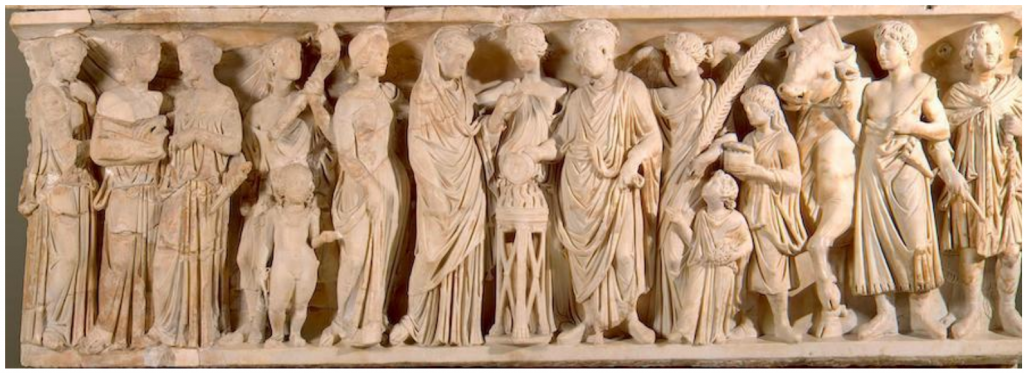
Julius Caesar was famously assassinated on the Ides of March in 44 BC because many Roman senators feared that he threatened the Roman Republic. After winning a civil war and famously crossing the Rubicon, Caesar looked rather too comfortable at the top and a group of senators, including some of his closest allies, formed a conspiracy to murder him. They believed that killing Caesar would protect Rome from tyranny and restore the power of the Senate. In reality, instead of saving the Republic, the assassination led to further and prolonged civil wars and ultimately helped to bring about Rome’s future under imperial rule.

Given that the Roman empire was one of the most powerful political systems in history, it is easy to forget just how tenuous an emperor’s grip on power truly was. Roman emperors supposedly held absolute authority, but their position depended upon the support of the senate, the army and the praetorian guard. If any one of those groups withdrew their loyalty, even the strongest ruler could be swiftly removed from office. These days, a man in such a position is forced to resign; in those days, you simply got murdered.

During the height of the empire, particularly from the first to third centuries AD, emperors were commonly assassinated. It’s one of the things that I find students are most puzzled by, perhaps because they have fallen for Roman (particularly Augustan) propaganda and see Rome as exemplary of stable governance. In reality, nothing could be further from the truth. One of the most dramatic examples of an emperor being forcibly removed from office was the assassination of the emperor Caligula in AD 41.

Caligula began his reign with enormous public support. The Roman people celebrated his ascension because he followed Tiberius, who was viscerally disliked, and he was also the son of the wildly popular general, Germanicus, who died very young. At first, Caligula appeared to be generous and charismatic, but his true colours soon became more than apparent and his behaviour towards members of the governing classes became cruel, erratic and humiliating. While ancient accounts may possibly exaggerate his faults (and the stories really are wild), nevertheless his relationship with powerful political groups certainly deteriorated rapidly and beyond repair. His popularity with the Roman people may have maintained his position for a while, but it was the praetorian guard who decided his fate when they assassinated him in his own palace.

The praetorian guard were an elite military unit stationed in Rome, whose purpose was to protect the emperor. By the same token, precisely because they had direct access to the ruler and were always armed, they also had the ability to dispatch them most efficiently. Following the murder of Caligula, many members of the senate wanted to restore the Republic again and abolish the office of emperor altogether, but their power by this time was weakened by the fact that they had already proved themselves impotent in the face of imperial power: most crucially, they lacked control over the army, but they also lacked popular support: the senators’ power had originally been brought down by populist leaders, who had exposed the undeniably self-serving systems set up by the ruling elite to perpetuate their own wealth and power. The decisive factor that ensured the senators were finished in all but name was the praetorian guard, who required an emperor to sign their pay cheques and indeed to justify their position. After Caligula was killed, the praetorians found Caligula’s disabled uncle, Claudius, hiding in the palace and proclaimed him as emperor. Once the military had backed Claudius, following the lead of the praetorian guard, the senate had no leverage to object. The removal of Caligula therefore demonstrates that, although the senate could support or justify the overthrow of an emperor, the men who carried the swords were the ones who decided things.

Another good example of an emperor being decisively removed from office is the fall of Nero. By AD 68, Nero had ruled for fourteen years. Initially he had been guided by capable advisers such as the philosopher Seneca. Early in his reign, he was relatively popular with the people because he sponsored games, artistic performances and public entertainments. His relationship with the senate, however, steadily worsened. Nero executed or forced the suicide of several senators whom he suspected of conspiracy, creating an atmosphere of fear among the traditional ruling aristocracy. His extravagant spending and controversial behaviour also damaged his reputation. But the decisive factor in Nero’s removal was his loss of military support. In AD 68, the governor of Gaul turned against him and shortly afterwards the Spanish governor, Galba, declared himself emperor. The praetorian guard abandoned Nero after being promised rewards by his Spanish rival: as a result, Nero had no protection in Rome, so the senate took the opportunity to declare him a public enemy and authorised his execution. Facing arrest, Nero was forced to take his own life, which was the traditional way for a condemned Roman aristocrat to make a hasty exit: these days, it’s called resigning for the good of the party.

Nero’s downfall once again highlights the importance of the army and the praetorian guard. The senate formally condemned him, but this action was only possible because he had lost the loyalty of the army in the provinces, who were demonstrating their growing political importance by supporting rival claimants such as Galba to the imperial throne. At the same time, the praetorian guard acted once again as chess-masters by switching allegiance when it suited their interests. Nero’s popularity amongst ordinary Romans may have delayed his downfall to some extent: ancient sources suggest that sections of the plebeians remained loyal to him because of his public entertainments and indeed because of his visible clashes with senatorial elite. But public support could not save an emperor once the military and political elite turned against him.

The emperor Commodus provides our final example of how imperial power could collapse. Commodus ruled from AD 180 to 192 and was the son of the respected emperor and philosopher Marcus Aurelius. Quite unlike his stoic father, Commodus became associated with corruption, extravagance and self-indulgence. He preferred gladiatorial games and personal luxury to responsible government and he increasingly alienated the senate by treating their traditional authority and governing experience with contempt. Commodus was quite the character and even participated personally in gladiatorial contests, something that aristocratic Romans found grotesque and degrading for a man of standing.

As Commodus became more paranoid and unstable, leading officials even feared for their lives and eventually members of his inner circle organised a conspiracy against him. An attempt to poison him failed, but ultimately the wrestler Narcissus was hired to strangle him in his bath. The senate immediately triggered the process known as damnatio memoriae, in which official images and references to a ruler were destroyed. This decisive removal of Commodus from public office again illustrates the weakness of emperors who had lost the support of the ruling elite. Although Commodus had attempted to maintain popularity with the masses through games and spectacles, this could not compensate for the hostility he faced among the senators and imperial officials. His death also demonstrates that conspiracies often emerged from within the imperial household itself. Following Commodus’s death, the empire descended into civil war, indicating that no ruler could govern successfully without military backing.

Throughout the height of the Roman Empire, the senate retained political importance but its power was limited compared to that of the army. Senators could legitimise or condemn emperors, as seen with Nero and Commodus, yet they rarely controlled events independently. The Roman army was ultimately the most significant force in removing emperors and the provincial legions frequently proclaimed their own generals emperor, especially during periods of instability. Military loyalty depended heavily on personal leadership and the promise of material rewards as a result of successful campaigns. Soldiers expected their leaders to provide financial bonuses as well as military victories: the two went hand in hand. If an emperor appeared weak, unpopular or incapable of expanding the empire, ambitious generals could and would challenge him. This military influence became even more obvious during the third century, when emperors rose and fell rapidly and the eventual collapse of the empire as we would recognise it became inevitable.

Within this monumental military might, the praetorian guard occupied a unique position due to their physical proximity to the emperor. Unlike distant legions, the guard was stationed in Rome and could intervene directly in palace politics. As seen in the case of Caligula, the guard was more than capable of assassinating the man with whose protection they were supposedly charged. Any passing similarities to UK cabinet members are, of course, entirely coincidental.

Photo by Martti Salmi on Unsplash

Babies and bathwater

A recent study reported in the press this week has apparently found that strict bans on mobile phones in schools have “close to zero” impact on student learning and show no evidence of improvements in attendance or online bullying. If we take such findings at face value and conclude that school phone bans are like to be ineffective, we are not only misreading the data but also misunderstanding the purpose of removing smart phones from our schools. The crucial point is not whether removing phones from the classroom instantly boosts results or turns around behaviour in schools that have problems; it is that schools have an opportunity to model healthier norms and support families in standing against what has become a tidal wave of addiction for the next generation.

The recent study cited in headlines found minimal measurable differences in academic outcomes or attendance between schools that banned phones and those that did not. Yet even the researchers themselves cautioned against interpreting this as evidence that bans are pointless. This is because educational outcomes (such as grades and attendance) are blunt instruments for measuring complex behavioural and psychological phenomena. Countless variables such as family life, socioeconomic conditions, prior attainment and curriculum quality cannot be neutralised simply by removing a device during school hours. Expecting a ban to produce immediate, measurable improvements is akin to expecting a single dietary change to transform long-term health overnight: I am currently trying to reduce my LDL cholesterol levels, and I don’t expect to see results in less than six months, nor do I necessarily expect to see them at all, as my high cholesterol may be genetic. (I strongly suspect, however, that my genetic inheritance might be a love of cheese rather than a fault in my liver’s ability to process lipids).

To understand why it is a good idea to remove smart phones from the school enviornment, let’s look at the broader research on smartphone use and adolescent wellbeing. A growing body of evidence points to significant associations between problematic smartphone use and mental health difficulties. For instance, research funded by the NIHR found that teenagers exhibiting problematic smartphone behaviours were twice as likely to experience anxiety and significantly more likely to suffer from depression and insomnia . Importantly, this research distinguishes between mere “screen time” and patterns of use that resemble addiction in the form of compulsive checking, distress when separated from the device and displacement or even rejection of other meaningful activities in favour of the device. It is this compulsive, immersive use that appears to be most harmful to young minds.

Other studies reinforce this pattern. Reviews of digital media use consistently show associations between heavy engagement and increased symptoms of anxiety, depression and isolation, while clinical research links intensive social media use even with suicidal ideation. Longitudinal studies suggest that adolescents with increasingly addictive patterns of screen use are two to three times more likely to develop suicidal thoughts over time. These findings are not trivial. They point to a behavioural ecosystem in which smartphones are not neutral tools but powerful, psychologically immersive experiences that can shape mood, identity, and social experience.

Government-commissioned reviews have noted concerns about severe harms including bullying-related distress and premature death among young people in digital environments. Parliament has examined evidence that cyberbullying via smartphones can lead to self-injurious behaviour and suicidal ideation. While causation is complex and multifactorial, coroners’ reports in the UK have increasingly referenced online experiences, including exposure to harmful content and sustained digital harassment, as contributing factors in youth suicides. Most famously thanks to her grieving father’s tireless campaigning, Molly Russell’s death was linked directly by the coroner to “the negative effects of online content”. It would be irresponsible to ignore this accumulating body of concern simply because a short-term study fails to detect immediate improvements in outcomes.

Moreover, the effects of smartphones extend beyond mental health into the texture of daily life. Young people now spend several hours a day on their devices, often displacing sleep, face-to-face interaction, and focused attention. Many platforms, driven by algorithms optimised for engagement, deliberately encourage habitual checking and prolonged use, creating feedback loops that are difficult for adolescents to regulate: frankly, they are difficult for adults to regulate. I chose to step away from social media entirely for personal use and the platforms I maintain for business I have removed from my phone, so that I can only look at them on a laptop: this helps to mitigate against their addictive nature, which is palpable and undeniable. The addictive design of social media platforms is driving a broader shift in how young people experience boredom, social interaction and cognitive effort. Schools, as institutions dedicated to learning and development, cannot simply ignore this shift, indeed they are experiencing the fallout firsthand. Ask any teacher (myself included) who has worked with young people both before and after the advent of smart phones and they will tell you: smart phones are detrimental to children’s ability to focus and concentrate. They are a net negative.

This is where the true rationale for banning phones in schools becomes clear. It is not about improving outcomes, it is about creating a protected environment in which alternative norms can be experienced and practised. Schools are one of the few spaces where society can collectively decide how young people spend their time. By removing phones, schools model a way of being that prioritises sustained attention, face-to-face interaction and engagement with the immediate environment. These are not trivial skills: they are foundational to learning, relationships and mental health, and they may not be being modelled at home.

Critics might argue that such modelling is paternalistic or authoritarian, but this fundamentally misunderstands how behavioural norms are formed. Young people do not develop their habits in isolation, they are shaped by their environments. If every space they experience, including their classroom, is saturated with digital distraction, then the idea of focused, device-free engagement will seem completely alien to them. Conversely, if schools consistently enforce phone-free environments, they can provide a counterweight to the rest of the day. Over time, this can help recalibrate expectations about when and how phones are used. Even if the measurable impact on grades is initially small, the long-term cultural effect may be substantial.

Equally important is the role that schools can play in supporting parents. Many parents currently feel overwhelmed by the challenge of managing their children’s phone use, particularly given the social pressures involved. If one child in a friendship group is allowed unrestricted access, others will quickly follow. School policies can shift this dynamic by creating a shared baseline and encouraging parents to listen to the instincts that are telling them that these devices are a threat to their children. When phones are banned during the school day, it becomes easier for parents to enforce limits at home, knowing that expectations are consistent across the community. In this sense, school bans are not isolated interventions but part of a broader ecosystem of guidance and support. The messaging becomes clear that smart phones are a cause for concern, in the same way that alcohol anc cigarettes are a cause for concern: while schools can’t prevent all children from discovering the highs that can be found via alcohol and nicotine, they can at least model the principle that these substances are problematic and undesirable.

It is also worth noting that the absence of immediate measurable benefits does not mean the absence of meaningful effects. Some studies have found improvements in classroom behaviour or reductions in distraction, even when academic outcomes may remain unchanged. These are valuable in their own right. A calmer, more focused classroom is a better environment for both teaching and learning, even if its impact on examination grades takes time to materialise. Education is not a simple input-output system: it is a complex, cumulative process.

Phone bans are not a silver bullet, they are one tool among many, to be used alongside education about digital literacy, parental guidance and broader societal conversations about technology use. Expecting them to single-handedly reverse trends in mental health or academic performance is not just unrealistic, it sets them up to fail. When the inevitable modest results appear, critics can then dismiss the entire approach, reinforcing a cycle of inaction. You throw the baby out with the bathwater.

Smartphones are deeply embedded in modern life. Schools cannot control what happens outside their gates, but they can shape the environment within them. By doing so, they send a signal about values: that attention matters, that conversation matters, that not every moment needs to be mediated via a screen. Ultimately, the debate about phones in schools is not just about education policy; it is about the kind of childhood and adolescence society wishes to cultivate. In that context, focusing solely on short-term academic metrics is a profound misreading of the issue. Schools cannot solve the problem alone, but they can play a crucial role in modelling a different way of living and learning: one that recognises both the power and the peril of the devices in our pockets.

Photo by Kamal Uddin on Unsplash

Together Forever?

soles occidere et redire possunt:
nobis cum semel occidit brevis lux,
nox est perpetua una dormienda.

Suns can set and rise again:
but once the brief light has set for us
there is just one everlasting night for us to sleep through.

Catullus, Poem 5

It has surprised me how many students have found these lines difficult to comprehend, a reminder that metaphors are not always obvious to students. One student recently hazarded a guess that Catullus was talking about the idea that he and his lover will be together forever in death. This not really what Catullus is saying at all: the poem focuses on the brevity of life compared with the yawning enormity of death, and uses this as an exhortation to make the most of the short time that he and his lover will have together. Furthermore, my student’s assumption that Catullus is talking about himself and his lover being united forever in the afterlife is an inherently post-Christian sentiment.

My student’s misinterpretation of Catullus’s musings on life and death came not long after I had finished another novel by RF Kuang, an author whom I have blogged about before. Her novel Katabasis is both grim and entertaining, following the travails of two research students who make a trip down to hell in an attempt to retrieve the soul of their academic supervisor. In the same way that Kuang’s previous novel Yellowface was a side-swipe at the publishing industry, Katabasis takes a highly critical look at the competitive world of academia. It also takes a spectacular tour of the ancient underworld, as seen through a variety of cultural lenses.

The way a culture imagines the afterlife reveals much of what it believes about life itself. For the ancient Romans, death was not a doorway into a joyful reunion with loved ones, nor a promise of restored relationships and perfected bonds. Instead, it was a shadowy continuation of our current existence, stripped of vitality, and warmth. The afterlife, even at its best, was a lonely and inadequate shadow of life.. The later Christian vision of the afterlife, especially the idea that death reunites individuals with those they love, rests on a fundamentally different emotional and philosophical foundation. Where Christianity tends to offer hope, restoration and intimacy beyond death, Roman thought leans toward distance, melancholy and an almost unsettling persistence of separation.

To understand this difference, it helps to look at how Romans conceived of the underworld. Deeply influenced by earlier Greek traditions, the Roman afterlife was typically imagined as a vast, dim realm beneath the earth, populated by shades, which were faint, insubstantial echoes of their living predecessors. These shades were not vibrant souls enjoying a new form of life, but diminished versions of their former selves. They retained memory (forgetting comes before reincarnation and a return to the upper world), but not vitality. Existence in this realm was often described as monotonous and emotionally flat, a place where the dead lingered rather than lived.

In this context, the idea of joyful reunion with loved ones has no place. Even when the dead encounter one another, their interactions are rarely depicted as comforting or restorative. Instead, such meetings often emphasise loss and regret, or the impossibility of truly reconnecting. The emotional tone is strikingly different from the Christian expectation that relationships will be healed and perfected after death. For the Romans, death did not mend what was broken in life; if anything, it froze those fractures in place.

Stories set in the underworld illustrate this vividly. When heroes descend into the realm of the dead, they often seek out lost loved ones, but what they find is not solace. Encounters are fleeting, strained and painful. The dead may recognise the living, but there is an unbridgeable gap between them. Attempts at physical contact fail, as the shades cannot be grasped. Words may be exchanged, but they carry a weight of finality rather than hope. The living leave with a deeper sense of loss rather than reassurance.

One of the most telling patterns in these stories is how often reunions are marked by emotional distance. A deceased loved one may turn away and refuse to engage or speak, displaying a kind of weary resignation that underscores the permanence of separation. Even when affection remains, it cannot be acted upon in any meaningful way. The relationship exists only as memory, not as a living bond. This is a far cry from the Christian idea that love transcends death and is fulfilled in eternity.

The Roman view is rooted in a different understanding of the self and its continuity. The soul, in Roman thought, does not necessarily retain the full personality or emotional richness of the living individual. It becomes something quieter, dimmer and more detached. Without the body, the soul’s capacity for connection is limited. Relationships, which in life depend on physical presence, shared experiences and emotional exchange, cannot fully survive in this diminished state. What remains is a kind of echo, not a continuation.

This helps explain why Roman literature often portrays the dead as solitary figures, even when surrounded by countless others. The underworld is crowded yet profoundly lonely. Each shade exists in its own muted sphere of awareness, unable to truly engage with others. Even when groups of the dead are described, they do not form communities in the way the living do. There is no sense of shared joy, no collective celebration, no renewal of bonds. The crowd does not alleviate loneliness; it deepens it.

The Christian concept of the afterlife places relationships at the centre of its promise. A stroll through my local graveyard reveals a multitude of 19th century graves that celebrate a family being reuited: their bodies are laid to rest together and the assumption is that their souls have reunited. Heaven is imagined not just as a place of individual salvation, but as a community of the redeemed, where love is perfected and reunion is assured. The idea that one will see loved ones again, recognise them and be reunited in a meaningful, joyful way is a powerful source of comfort to many (although as a child I often used to ponder how it would work for someone who remarried after their partner’s death: would they all hang out together in the afterlife?) Death, in the Christian framework, is not the end of a relationship but its transformation into something more complete.

Roman culture, for all its emphasis on family, duty and social bonds in life, did not project those values into the afterlife in the same way. Instead, the Romans believed that death severs the active dimension of those bonds. Memory may persist, but the relationship itself does not continue in a fulfilling sense. The finality of death is not softened by promises of reunion.

Even the rare exceptions in Roman thought, such as the idea that particularly virtuous individuals might enjoy a more pleasant afterlife, do not fundamentally alter the overall gloomy picture. These individuals may dwell in more favourable regions of the underworld, but the emphasis is still on individual reward rather than relational restoration. The joy, if it exists, is not primarily about being reunited with loved ones, but about relief from suffering or recognition of virtue. Relationships remain secondary, if they are present at all.

Another important aspect is how the Romans viewed grief. In a culture where the afterlife did not promise reunion, mourning had a different character. The dead were honoured, remembered and ritually maintained through practices that acknowledged their continued existence in some form. Yet these practices did not imply that the dead were waiting to embrace the living again in a future life. Instead, they reflected a desire to maintain a connection across a boundary that was understood to be fundamentally unbridgeable. This creates a poignant tension. On the one hand, Romans cared deeply about their loved ones and sought to preserve their memory. On the other hand, their worldview offered little hope that these relationships would be restored after death. The result is a kind of restrained sorrow, an acceptance that loss is permanent in a very real sense. The dead are not gone entirely, but neither are they truly present.

In stories of the underworld, this tension often reaches its most dramatic expression. A living visitor may be filled with longing, eager to see someone they have lost, only to discover that the person they remember is no longer fully there. The encounter becomes a confrontation with the limits of memory and the reality of change. The loved one is both present and absent, recognisable yet unreachable. The emotional impact is not comfort but a deepened awareness of loss. Death remains a boundary that cannot be undone. The afterlife is not a continuation of life’s relationships but a separate, diminished mode of existence. Encounters between the living and the dead, when they occur, serve to reinforce this boundary rather than dissolve it. They remind us that what has been lost cannot be recovered.

For the Romans, the afterlife was not a place where you would run into the arms of those you missed. It was a place where you might see them again, but only as shadows, only at a distance, and often only to feel more acutely the separation that death had created. Reunion, when it occurred, was not a resolution but a reminder of what once was. It attests to a fundamental difference in mindset and attitudes to death that I find endlessly fascinating.

Photo by James Lee on Unsplash

Byzantine Matters – a tribute to Averil Cameron

Averil Cameron, who died earlier this month, was one of the most transformative figures in the study of the ancient world. Tributes have been paid across multiple publications and her obituary has appeared this week in both The Times and The Guardian.

Not only did Cameron’s scholarship reshape how we understand Byzantium, her very presence in academia was quite remarkable at the time. Born into a modest family in Leek in Staffordshire, the daughter of two factory workers, she did not inherit the cultural capital that usually smoothed the way into Classics at Britain’s most prestigious universities. But Cameron’s parents were supportive and valued education, and she was entered for the 11+ examinations and gained a place at the local grammar school. More than one teacher seems to have spotted her potential and her parents were encouraged by the school to consider preparing her for university. At a time when academia still felt like a closed shop run by the male elite, particularly in fields such as Classics, Cameron found her way in not through entitlement but through sheer intellectual excellence. Mary Beard, a friend of Cameron’s as well as a colleague in the field, has paid tribute to her and credits Cameron’s influence on her own access to the field: her first academic position was granted to her by Cameron.

At a time when women were still wildly under-represented in senior academic roles, indeed a world in which women were regularly taken off academic shortlists to make way for men, Cameron rose to positions of leadership. To give you an idea of the world we are talking about, she was appointed as an assistant lecturer at King’s College, London in the mid 1960s, when the faculty dining room did not admit women. She maintained a steady focus on the work itself rather than the politics and indeed remarked in 2024 that she felt she had published too much, citing an inability to say “no” to any publishing opportunity that came her way. Cameron’s copious output has helped to normalise the centrality of women in spaces and on shelves where their presence had once been the exception. In an era when conversations about access and indeed the very purpose of higher education continue to evolve, Cameron’s contribution offers a truly inspirational model. Furthermore, she was not interested in guarding disciplinary boundaries, but drew on history, theology, literature and cultural studies, long before such an interdisciplinary approach became the norm. In doing so, she helped to broaden the scope of what it meant to study the ancient world, inviting others to see connections that had previously been overlooked.

Cameron’s perspective as a new and fresh pair of eyes on the scene would prove to be one of her strengths as an academe. Rather than simply reproducing the traditional narratives or, as Peter Brown put it, the “debased images of Byzantium” that she inherited, she questioned them. Cameron approached the late antique and Byzantine worlds not as declining remnants of classical greatness (the general approach taken by scholars since Gibbon’s definitive Decline and Fall), but as vibrant, evolving cultures that defined the world to follow. This shift in perspective helped to reshape entire fields of study: where earlier scholars had often dismissed Byzantium as a derivative world in decline, Cameron — along with Peter Brown and a handful of others — helped to reveal its richness and complexity as well as its centrality to understanding the evolution from antiquity to the medieval world. She had a profound influence on me and helped to foster what would become my research focus. The publication of two of her works, The Mediterranean World in Late Antiquity and The Later Roman Empire, both in around 1993, coincided exactly with my first exposure to this period during my second year of study at university. The rest, as they say, is history.

This tribute would not be complete and I would not be any kind of (albeit ex) academe were I not to ensure that my acknowledgement of Cameron’s academic achievements reflect on me in some way. So here we go. Well, I only met her once, when she interviewed me for a potential place to do a Master’s degree at King’s College, London, when I was still considering which path to take and where to study after my first degree. It was the toughest interview I have ever had: way, way more difficult than the viva I had to undergo to be awarded my PhD, which was barely more than a nice chat. Cameron was absolutely brutal. She considered my record to date with languages woefully inadequate and told me that as things stood I would be ill-equipped to cope with research. She advised me to change the selections I had tentatively made for the next year and focus on building up my language skills if I wanted to stand any kind of chance at furthering my career in academia. I came away pretty upset but with the sneaking and uncomfortable feeling that she was right. In the end, I took her advice and I opted for further training in both Latin and Greek. To this day, I am immensely grateful to her that she told me how things were, not how I would have wanted them to be. Not only was she right about my need for further training, she was proved more and more right the further I travelled down that path. By the time I was half way through my PhD I realised that not only were my Latin and Greek barely sufficient for work at the level demanded, I was also going to struggle due to my lack of French and German; a significant proportion of the scholarship in Classics is published in those languages, which nobody tells you until you get a considerable way down the rabbit hole. Long story short, languages (both ancient and modern) are momumentally important if you’re going to study Classics with any level of seriousness. Aspiring scholars, take heed.

Cameron’s death leaves a gap that will be felt across many fields, but her influence endures in the questions scholars continue to ask themselves, in the frameworks that they use and in the more enlightened vision of academia that she helped to advance. Her journey from modest beginnings to the forefront of intellectual life was not just a personal triumph; it serves as a reminder of what becomes possible when talent is allowed to flourish. Her contribution to scholarship is simply immense.

Finding your Way

I have always thought of myself as someone who is fundamentally miswired when it comes to getting myself about. My internal compass is completely absent. Not just slightly out of kilter, you understand, but fundamentally and dramatically wrong — enough to turn a ten-minute walk into a humiliating loop past the same shop three times. My sense of direction isn’t just bad, it is non-existent, as if I have been born without whatever quiet internal certainty tells other people, “this way makes sense.” I’ve always envied those who have that innate sense of the right way: my father navigates the world like an indigenous man on walkabout. Sadly, I did not inherit a single iota of his instincts, to the extent that I’m surprised that I know the difference between left and right.

For most of my life, my appalling sense of direction has been a significant handicap and I suspect it had an impact on my confidence in other spheres. If I can’t reliably find my way across a town or even within the building in which I work, how on earth was I supposed to navigate anything larger: major life decisions, life ambitions, the invisible map of life? Other people seem to stride forward with invisible coordinates guiding them, while I would hover at crossroads, second-guessing, recalculating, almost always choosing a path with the distinct feeling that I might soon regret it.

Then, almost overnight, the world changed. Or rather, the tools in my pocket did. What used to require a well-thumbed but mysterious (to me, at any rate) A to Z, guesswork and a regular prostrating of my dignity onto the mercy of strangers, all of this has now been superceded by the reassuring warm glow of technology. Even more wondrously, it doesn’t sigh or say “I told you so” when I end up getting lost. It simply recalculates, endlessly patient, as if wrong turns are not failures but part of the process.

At first, I used it defensively. I would check directions obsessively, zooming in on routes, memorising landmarks as if preparing for an exam. But slowly, something unexpected happened. I stopped treating navigation as a test I had to pass and started treating it as a conversation. I could walk, drift even, knowing that if I wandered too far off course, I wouldn’t be lost — I would just be somewhere new, with a way back always available thanks to the super-duper magic pocket-wizard.

When you no longer fear being lost, the world opens up in subtle ways. Streets become less like corridors you must follow correctly and more like possibilities you can explore. A wrong turn isn’t a mistake: it’s a detour with an exit strategy. The pressure to always “get it right” dissolves, replaced by a quiet confidence that you can recover, adjust and continue. Even more pleasingly, I no longer find myself late for an appointment, lost and crying. (Yes, humiliatingly, that has happened: at one low point in 1993 I spent an hour and a half trying to find the location of a lecture I was supposed to attend in London for my degree: in despair, I sat down on some steps and blubbed, only to realise after a couple of minutes that I was actually sitting on the steps of the building in which I was meant to be attending the lecture).

Life in the 1990s felt like one long navigation problem for me. Choosing the wrong path early onmeant ending up miles away from where I was meant to be, with no simple way back that didn’t involve an expensive taxi ride. Now, I wonder if direction isn’t about always knowing where you’re going, but about trusting that you can keep moving, even when you don’t. That’s the freedom that technology has afforded me. The tiny blue dot on my iPhone’s digital map — steady, present and always updating — feels like a metaphor for something I never realised I needed: reassurance that my current position has a way out and a way forward.

I still have a terrible sense of direction and I am at peace with that. If you took away my iPhone, I would probably end up circling that same corner shop, wondering how I got there again. But I no longer see that as a personal flaw so much as a different way of moving through the world. I am someone who wanders, who doubles back, who explores by accident. And now, with my talisman in my pocket, I am reminded that no step is irreversible; wandering feels less like failure and more like a way of discovering paths I never would have chosen on purpose. Maybe that’s what direction really is: not a straight line, not a fixed bearing, but the ability to keep going, to adapt: to trust that, even if you don’t know exactly where you are, you are never lost forever.

Photo by Johannes Plenio on Unsplash

The Trouble with Sleep

As someone who works almost exclusively with young people between the ages of 14 and 16, I am well-versed in the problem of teenagers and sleep. Any teacher who has been scheduled a challenging class on a Monday morning will understand the issue, but since working online I regularly have the pleasure of being presented with a youngster who has quite obviously been peeled unceremoniously from their bedsheets less than a minute prior our session. I have often advised parents to book a later session, on the grounds that their child is simply not in a fit state to absorb anything prior to mid-morning. There are some that can cope, but for others it becomes apparent that their parents will be wasting the money that they pay me, so groggy and unengaged is their child when the session begins. But just why do teenagers find mornings so palpably difficult?

At the centre of everything is our circadian rhythm, the internal clock which governs when we feel sleepy and when we feel alert. In younger children, as every parent knows, the clock tends to run on the early shift; but somewhere around puberty, the clock shifts — enough to have a pretty big impact. In adolescents, the hormone melatonin, which is central to what drives our urge to sleep, is released later in the evening compared to both children and older adults. This shift in their natural sleep phase means that teenagers genuinely feel more alert late into the evening and do not feel ready to sleep until much later than they used to. I remember this with visceral clarity. Staying up to watch Moonlighting, followed by Indelible Evidence, felt effortless, while waking the next morning felt simply agonising. Teenaged bodies, still growing and developing rapidly, require a substantial amount of rest — typically around eight to ten hours. But if a teenager is wired to fall asleep at midnight, yet still needs to wake up at 7.00 a.m. for school, then we’re faced with a problem.

I always like to ponder why these evidential facts about our biological nature and development might have evolved. It is undeniable that most teeangers experience a change in their body clock as they develop, and it is also undeniable that adults vary in terms of their own body clock: some are natural night owls, some are larks. (You probably have a good idea which one you are, but it’s quite fun to do the test: some people are very strongly one or the other, some people are flexible. I am as much of a lark as it is possible to be). So, why might it be that we vary in this way? As humans evolved, it would have been useful for a tribe to have a variety of members within it, to ensure that there is always someone that is capable of being hyper-vigilant at any time. When life was lived on a knife-edge, an endless battle for survival, it was crucial for the safety of everyone that at least some members of the tribe were capable of functioning at any one time. Thus, these subtle differences in how alert we feel at different times of the day may have been an essential advantage and thus these differences were perpetuated through natural selection.

Of course, biology is only part of the story. If teenagers were tucked away in candlelit rooms with nothing but a paperback novel and their thoughts, they might still stay up slightly later than the adults in the household, but probably not quite as late as they do now. Modern life has introduced a dazzling array of sleep-delaying tactics, most notably in the glowing rectangle of the smartphone. Social media, messaging apps, streaming platforms — all of these operate on the principle that there is always one more thing to see, one more conversation to have, one more video that might be even funnier than the last. If you can establish one rule in the home, it should be that these devices do not take the journey to bed with you. Teenagers are particularly sensitive to reward and novelty, meaning that the little bursts of satisfaction provided by notifications, likes and new content are especially compelling. The result can be a perfect storm: a brain wired to seek stimulation, a body that doesn’t feel sleepy yet, plus a device that delivers endless entertainment on demand. Bedtime, under these conditions, becomes achingly oppressive.

Waking up early for school is difficult not because teenagers are being dramatic (although, to be fair, some drama may be involved in some cases), but because the teenaged internal clock is still firmly set to “night mode.” When an alarm goes off at 6.30 a.m., it is essentially interrupting the biological equivalent of midnight. Imagine being forced to wake up at 2.00 a.m. and then expected to perform algebra, write essays and engage in meaningful discussion. That is not far off what most teenagers are experiencing every day.

The misalignment between biological rhythms and social expectations is sometimes referred to as “social jet lag”. It’s the same groggy, disoriented feeling one might have after flying across time zones, except instead of being a temporary inconvenience, it is a daily occurrence. The result is chronic sleep deprivation, which has a range of effects that extend far beyond simply feeling tired. In the classroom, this can manifest as difficulty concentrating, slower cognitive processing, and a general sense of mental fog. Teachers may notice students staring into space, struggling to retain information, or reacting with the enthusiasm of someone who has been asked to solve a puzzle while underwater. It’s not (always) that teenagers don’t care about their education; it’s that their brains are not operating at full capacity during the hours when learning is expected to happen.

Sleep deprivation is also closely linked to irritability, emotional volatility and increased stress. Sound familiar? Parents, who may already be operating under the assumption that their teenager simply needs to go to bed earlier, are so often met with morning grumpiness that can escalate into full-blown conflict. The state that a young person is in can reinforce the adults’ belief that the child should retire to bed earlier. The teenager, meanwhile, feels misunderstood and unfairly judged, leading to a cycle of frustration on all sides. What makes this situation especially tricky is that both perspectives contain elements of truth. Teenagers do, in many cases, make choices that exacerbate the problem — staying up later than necessary, using devices late into the night and underestimating the importance of sleep. I did this myself on an infinite loop and looking back it seems ridiculous. Yet at the same time, I remember vividly how alert I felt in the late evening and how utterly unattractive it seemed to take myself off to bed. The fact remains that the underlying biology of teenagers genuinely does make early sleep and early waking more difficult for them. It is not a simple matter of willpower, nor is it entirely in their control.

Some schools have tried to take the peculiar biology of teeangers into account by experimenting with later start times. Research suggests that even a modest delay in the beginning of the school day can lead to improvements in attendance, academic performance and overall well-being. Teenagers who are allowed to wake up in closer alignment with their natural rhythms tend to be more alert and more engaged. I have always wondered, however, what these schools are like for the adults. Speaking as someone whose energy is now heavily weighted towards the morning (I spring awake, starving hungry, at around 5.30am most days), I would hate to work in a place where the day was shifted later. This is the problem: the teenagers are not the only ones with skin in the education game.

Given that all schools still start significantly earlier than most teenagers would like, there are nevertheless small changes that can help. Exposure to natural light in the morning can nudge the circadian rhythm slightly earlier, making it easier to wake up over time. Limiting screen use in the hour before bed can reduce the stimulating effects of both blue light and stimulating content, giving melatonin a better chance to do its job. Consistent sleep schedules, even on weekends, can also make a difference, although this is perhaps the most challenging suggestion of all, given the powerful allure of a Saturday lie-in. It all seems rather easier said than done, and my parents certainly gave up even trying. Ultimately, understanding is key. If families can recognise that their teenager’s sleep patterns are not entirely a matter of choice, and if teenagers can be persuaded to acknowledge that their habits can influence their well-being, the conversation can at least be had.

It is, in the end, a delicate dance between what our bodies want and what our schedules demand. Teenagers, caught in the middle of this dance, are not failing at mornings so much as they are beginning to negotiate with them. If they’re lucky, they will become a lark like I did, and the world will become an infinitely easier place to negotiate (unless they want to work in the nightclub industry, I suppose). So, if your teen occasionally hits the snooze button one too many times, it might be worth remembering that they are not resisting the day — they are just trying to catch up with a night that ended a little too soon for them.

Photo by Greg Pappas on Unsplash

Proud to be a Scout

Last week, there was something of a debate amongst my now quite elderly parents and me. I remarked that I genuinely struggle to understand why so many people are so reluctant to change their minds. What on earth was so frightening about it? My father, a trained scientist, seemed to get where I was coming from. My mother, a trained counsellor, was less impressed. She sees everything through the matrix of people’s emotional responses and finds it easy to comprehend the ways in which people’s fears and hang-ups are their most powerful driving forces. But I genuinely struggle to understand why people are so fixed in their ways of thinking.

While I’ve never considered myself to be much of a scientist (a glance at my GCSE grades will confirm this for anyone in doubt), I do like to think that I am a rationalist and that I base my responses to most things on the evidence in front of me. I am also, I think on balance, quite emotionally robust. Given these two character traits, I will confess that I genuinely struggle to comprehend why changing one’s mind about something is considered to be such a terrifying prospect; but the older I get, the more I am forced to acknowledge that for many it seems to be so.

In the same week, I met a friend who filled me in on some local gossip and remarked, in passing, that living in our village had been good for her, since she had been exposed to a range of people with different political views and discovered (in a manner that she reported with some surprise) that Conservative voters did not all possess the horns of Beelzebub. She reflected on the limitations of being brought up in a home in which one political viewpoint was presented (a household that she summed up as “Guardian-reading”). I reflected on the fact that I felt there had been a variety of political standpoints within my close family and that these had been openly (and sometimes quite heatedly!) debated, perhaps leaving me open to the notion that there can be well thought-out (and indeed extremely badly thought-out) views on all sides. She said that she envied this experience. It was genuinely fascinating and gave me further pause for thought. Might this exposure to conflicting politics within one family be another reason why I am interested in rather than threatened by alternative viewpoints?

Also this week, whilst listening to a podcast, I heard a reference to an analogy used in human psychology that I had not come across before, and it chimed with all the thoughts I had been having about tribal thinking versus the ability to change one’s mind. I looked up the reference and was fascinated to discover someone called Julia Galef, an author and co-founder of the Center for Applied Rationality. Galef argues that some people act like “soldiers”, while others act like “scouts”. “Soldiers” in her analogy tend to approach a discussion from the sole position of defending their beliefs, attempting to discredit or dismiss conflicting information and seeing the alternative viewpoints as the enemy to be shot down. “Scouts”, by contrast, are motivated more by the desire to find the truth regardless, of their starting point.

But before we “scouts” get too smug about our Stoic capacity for reason, according to Galef, our tendencies towards being either a “soldier” or a “scout” are both rooted in our emotional responses and learned behaviour. The “soldier” mindset tends to be held by someone who is motivated by connection and community (which can lead to tribalism), whereas someone with a “scout” mindset is more likely to enjoy the process of discovering new things (which can lead to innovative or creative thinking, but carries with it the threat of isolation). For a “soldier”, the process of changing your mind feels like a weakness or even a defeat. For a “scout”, it as something positive and exciting. This is exactly how I feel. To me, the process of changing my mind isn’t simply non-threatening: it is genuinely thrilling and wonderful. I love discovering that I have been wrong about something, or that my understanding of a topic has been flawed. I find it genuinely mind-boggling that people can hold the same views that they have always held, and borderline distressing to imagine that they find the process of change a net negative.

In a quest for further knowledge, I will delve into Galef’s book, The Scout Mindset, and find out if her analogy resonates once I’ve read it in full. For now, I feel genuinely happy to be a “scout” and can highly recommend it. It might not make you the most popular person at the party, but it does make you the one who will point out that the emperor is stark, staring naked.

Photo by Shelagh Murphy on Unsplash